
Wall Street Is Still Pricing This Space Company Like a Lottery Ticket. Its Order Book Says Otherwise.
Research Desk · Last updated August 2026
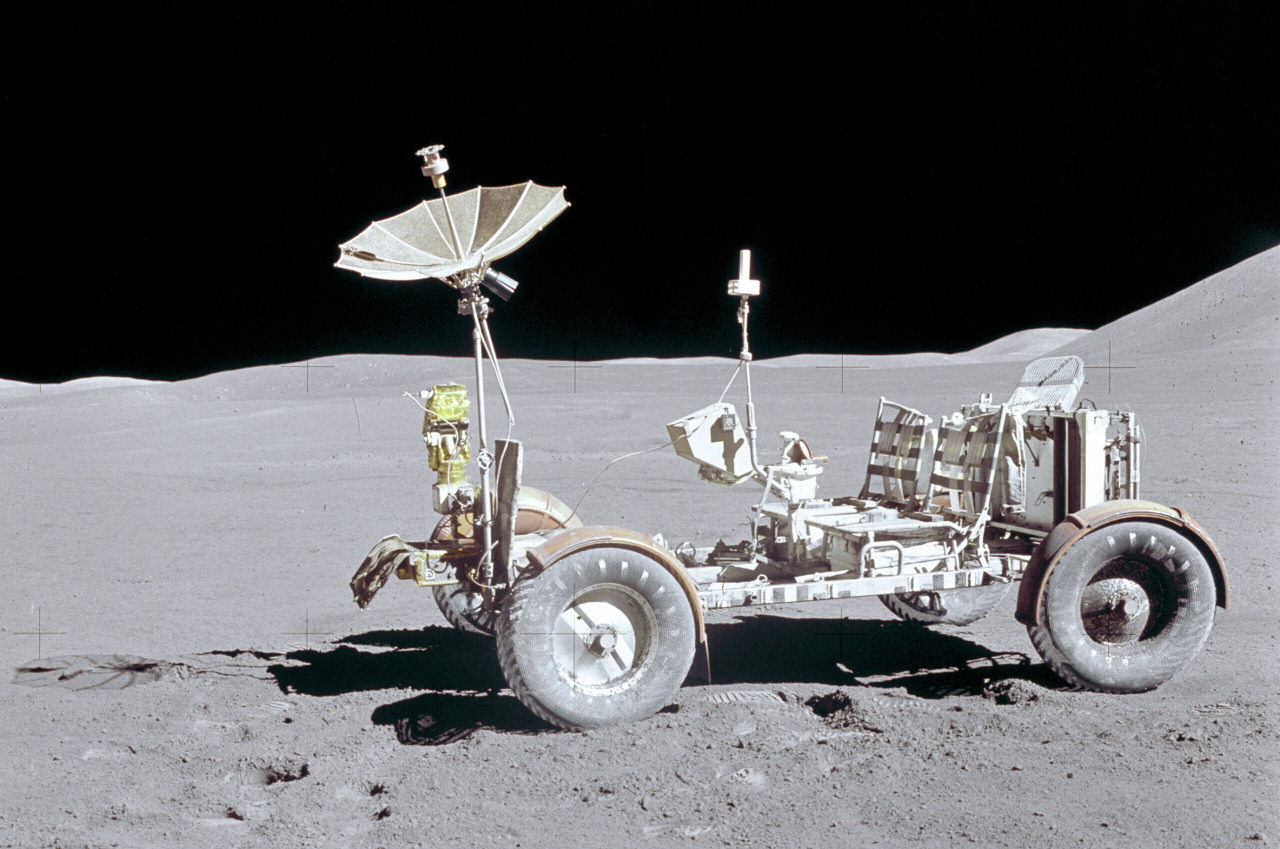
Illustrative image, NASA (public domain). Not an Intuitive Machines craft.
- Intuitive Machines (NASDAQ: LUNR) builds spacecraft and space infrastructure for NASA, the Pentagon, and commercial customers. The stock trades near $13, down about 72% from its 52-week high, after the whole space sector sold off this summer.
- The reason to look closer is the order book. The company ended its most recent quarter with a record $1.1 billion backlog, up from just $213 million at the end of last year, and expects 60% to 65% of it to turn into revenue this year. That backlog covers roughly 70% of full-year guidance.
- The appeal is the asymmetry. A company with real, contracted government work, now turning its first positive operating profit, is priced as though its business might evaporate. Analysts’ average target sits near $41 against a price around $13. The risk is that it loses money, dilutes shareholders, and swings violently on sentiment.
Most investors know Intuitive Machines (NASDAQ: LUNR), if they know it at all, for a single dramatic image: a lunar lander tipping over on the surface of the moon.
That is how the stock still trades, lurching on launch-day headlines as if each mission were the entire company.
Underneath the headlines, something less cinematic and more valuable has been taking shape.
The company has become a diversified contractor with a billion-dollar order book. And because the market is still watching the launches instead of the ledger, you may be able to buy that order book at a steep discount.
Financial Times says this tech puts America "on the verge of a financial revolution." Yahoo Finance says it could unlock $400 trillion.
Jeff Brown was consulted by Congressional offices in Washington, D.C. to advise on it.
He says the real number is even bigger
As much as $2.6 quadrillion could pour onto a new type of investment exchange in the days ahead…
What the Company Actually Does
Strip away the romance of space and Intuitive Machines is, at heart, a government contractor.
It builds and flies spacecraft, delivers cargo to the moon for NASA, runs communications and navigation networks that other missions depend on, and increasingly does engineering work for national-security customers.
That last part matters. Over the past year the company has moved well beyond moon landings. It bought a space-systems business called Lanteris for roughly $800 million, turning itself into what the industry calls a prime contractor, the lead company on large, multi-year programs.
It is buying ground stations and antenna networks to handle the data those missions generate. The picture is less a single moonshot and more a toll road for the emerging space economy.
Why does a company like this get so cheap? Because space is lumpy and dramatic. A delayed launch or a lander that tips over produces frightening headlines, and frightened investors sell first and read the contracts later. That gap between the drama and the ledger is where the opportunity hides.
The Order Book Is the Whole Story
Here is the number that reframes everything. The company ended its most recent quarter with a record backlog of about $1.1 billion in signed, contracted work, up from just $213 million at the end of last year. Management expects 60% to 65% of that to convert into actual revenue this year, and the backlog alone covers roughly 70% of the company’s full-year revenue guidance of $900 million to $1 billion.
Think about what a backlog is. It is not a hope or a projection. It is work customers have already agreed to pay for. For a company the market treats as a speculative gamble, having most of a year’s revenue already under contract is a genuine floor under the business, and it is the single most important fact in this entire note.
Just as important, the company turned its first-ever positive operating profit last quarter, a small but real signal that the model can make money rather than only spend it.
But according to new satellite images from 300 miles above the Earth's surface, there is something very strange going on at SpaceX right now that has nothing to do with space.
It could soon replace our need for foreign oil forever and ignite a $10 trillion boom for the stocks involved.
Click to learn more.
Why It Fell, and Why That Can Be the Opportunity
The stock did not collapse because the business broke. It fell because the entire space sector re-rated this summer, as a high-profile rocket failure elsewhere cooled enthusiasm for anything space-related. When a whole group sells off together, the good and the flawed get marked down side by side, and the market stops distinguishing between them.
That is often where asymmetric opportunities come from. If the drawdown is about sector mood rather than this company’s contracts, then a business with a billion-dollar order book trading 72% below its high is being punished for something that has nothing to do with its actual work. The analysts who cover it seem to think so: their average price target sits near $41, more than triple the current price, with a high estimate of $75 and a low of $11.
The Bull Case and the Bear Case
A record $1.1 billion contracted backlog covering most of this year’s revenue, first-ever positive operating profit, and a transformation from lunar lander into a diversified space-and-defense prime contractor. Trading 72% below its high on a sector-wide selloff, with an analyst average target near $41 against a price around $13. If the backlog converts and the sector mood turns, the re-rating could be large.
The company still loses money on a net basis and has missed earnings estimates repeatedly. It raised money through convertible debt, which can dilute existing shareholders. A co-founder recently sold a block of stock. Government contracts are lumpy and can slip by quarters, and the shares can move 15% to 20% on sentiment alone. This is a volatile, speculative holding.
The Asymmetric Case
Put the two sides together and the shape of the bet becomes clear.
The downside is cushioned, though real. A billion-dollar backlog and a newly positive operating profit mean this is not a company running on fumes toward zero. It has contracted work and a widening set of customers. It can still fall, especially on a bad quarter or a broader space-sector slump, but there is a floor of real business beneath the share price.
The upside is where the asymmetry lives. If the market stops pricing this as a launch-day lottery ticket and starts pricing it as the contracted infrastructure business its order book describes, the re-rating from around $13 toward the analysts’ $41 average, or beyond, is the kind of move that defines this style of investing. You are risking a modest, defined amount for a shot at several times that.
His salary is $400,000 a year.
But his tax returns show he collects up to $250,000 a MONTH from one source.
It's not real estate. It's not stocks.
Discover what it is... And how you can get in for less than $20
The Bottom Line
Intuitive Machines is a real, contracted space-infrastructure business that the market is still valuing as a coin-flip on the next rocket launch. That mismatch, between a billion-dollar order book and a beaten-down share price, is exactly the kind of setup worth understanding.
It is not a sure thing. The company loses money today, the dilution and the volatility are real, and government work can slip. Own an idea like this the way asymmetric bets are meant to be played: a small, deliberate position, sized so a total loss would not hurt you and a multiple-times win genuinely would matter. The next real test is the company’s upcoming quarterly earnings report, where the market will look for proof the backlog is converting into cash.
Disclaimer:
This content is for informational and educational purposes only and does not constitute financial, investment, or trading advice. All opinions expressed are based on publicly available data believed to be reliable but are not guaranteed for accuracy or completeness. Investing and trading involve risk, including the possible loss of principal. Always perform your own due diligence and consult with a qualified financial advisor before making investment decisions. Past performance is not indicative of future results. Paid ads from 3rd parties are clearly identified. We do NOT specifically endorse these products nor are we responsible for the content of these ads. You should assume an affiliate payment will be made to us if you click a link or buy a product.